
Snow melt systems that clear the driveway before you’re up.
Heated driveways, walkways, steps and entries for homes and cottages across Simcoe County and Muskoka — designed as part of the hydronic system, not bolted on after.
Why snow melt
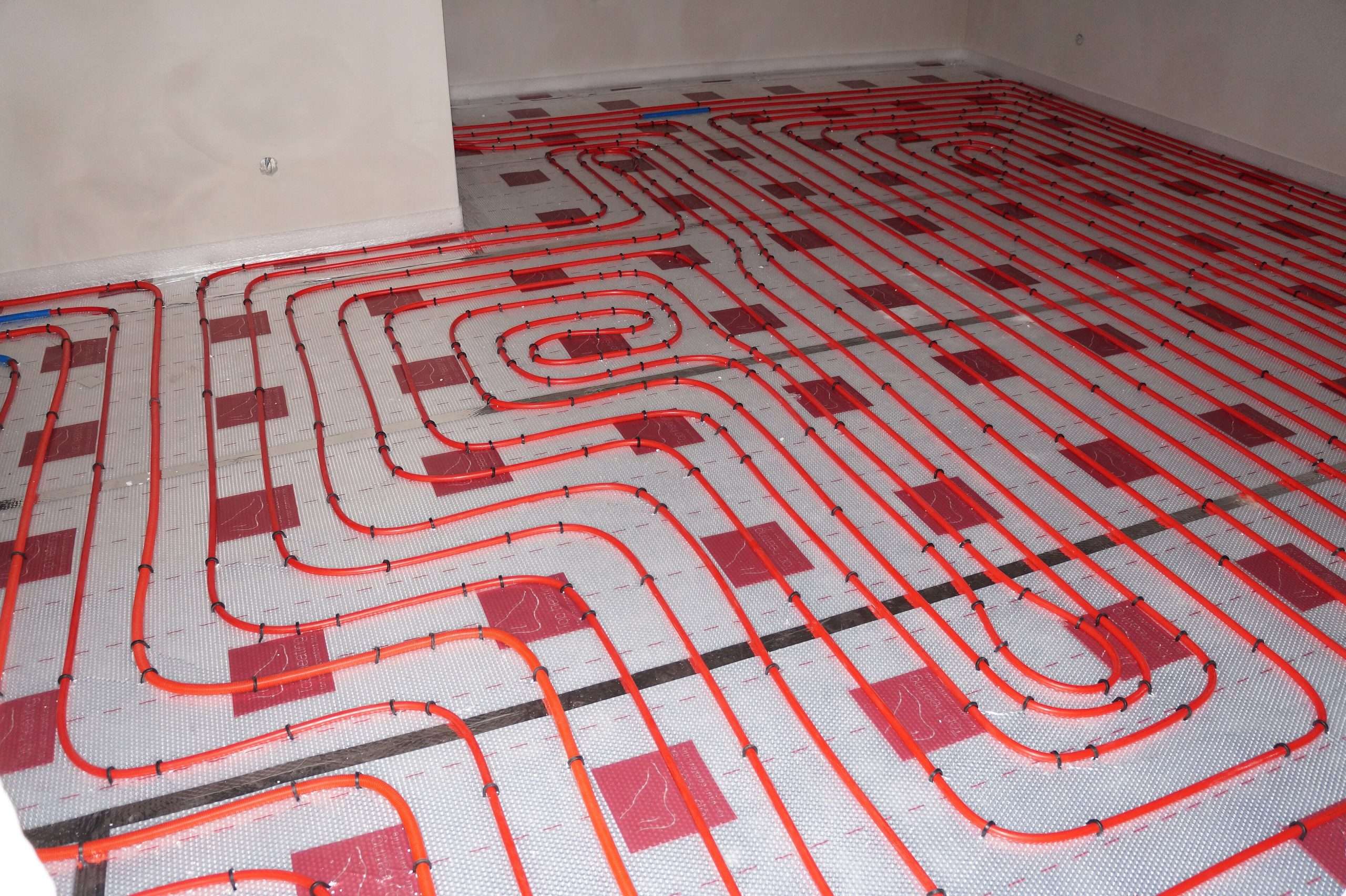
A snow melt system runs warm glycol through PEX loops in the concrete or in the bedding under pavers. Sensors in the slab detect moisture and temperature, so the system idles until it is needed and shuts off when the surface is dry. No shovelling, no salt eating the concrete, no ice on the front steps.
It makes the most sense when the driveway is being poured or rebuilt anyway, on steep or shaded drives where plowing never keeps up, and on the steps and walkways where a fall actually matters.
What we install
Driveway & apron loops
PEX in concrete or under pavers, zoned so the whole drive doesn’t have to run for the front walk.
Steps & walkways
Tight loop spacing where ice forms first. Front steps, side entries, the path to the hot tub.
Dedicated or shared plant
Its own condensing boiler, or a zone off the house boiler through a heat exchanger with its own glycol loop.
Slab sensors & controls
In-slab snow and ice sensors with a controller that runs on demand, plus a manual override for a storm.
Glycol, pumps & fill
The right glycol mix for Muskoka winters, with pumps sized for the loop lengths and a proper fill station.
Idle & setback modes
Keeps the slab just warm enough to respond quickly without running all winter.
How we do it
Where snow melt fits
Snow melt systems
Includes tubing, glycol loop, controls and the boiler capacity to run it. Any rebate you qualify for is built into the written quote. See the full cost guide →
“Peter is truly one of the best out there! Reliable, knowledgeable, and offers fair pricing. We couldn’t recommend him more.”
— Rachael M., Google review
Questions we get asked
A slab sensor detects moisture and freezing temperatures and starts the system automatically, so it idles most of the winter.
It only runs during and after a snowfall. Operating cost depends on the area and fuel; we estimate it in the quote.
Only when the slab or pavers are being replaced. It is best planned with the build or the driveway project.
Sometimes. We check capacity; often a dedicated or upsized boiler is required.
Yes. Entry pads and steps are a common smaller project and remove the ice-on-the-stairs problem.
Pouring a driveway this year? Plan the snow melt now.
The loops go in before the concrete. Send us the site plan and we’ll come back with a layout and a fixed price.