Do Heat Pumps Work at -25°C? What to Expect in a Simcoe County or Muskoka Winter
Written by the Northland Home Comfort team — TSSA-registered heating, cooling and hydronics contractor (FS-R-50021) serving Simcoe County and Muskoka. Updated October 2026.
Short answer: Yes. A cold-climate heat pump keeps heating at -25°C and most models are rated to -30°C. Capacity drops as it gets colder, so the system is sized for the design temperature here (about -24°C to -27°C across Simcoe County and Muskoka) and paired with backup heat for the few coldest nights. The heat pumps that “stop working in winter” are standard models that were never meant for this climate, or cold-climate units installed on the ground where they drown in snow.
What happens to a heat pump as the temperature drops
A heat pump moves heat from outside air into the house. There is heat in the air at -25°C; there is just less of it, and the compressor has to work harder to get it. Three things change as it gets colder:
- Capacity drops. A cold-climate unit rated for 36,000 BTU at 8°C might deliver about 70 percent of that at -15°C and 50 to 60 percent at -25°C. Standard heat pumps fall off much faster.
- Efficiency drops. At mild temperatures you get three to four units of heat per unit of electricity. At -25°C it is closer to 1.5 to 2. Still better than electric baseboard, which is 1.
- Defrost cycles run. Frost builds on the outdoor coil between about -5°C and 5°C. The unit reverses briefly to melt it. That is normal. Steam off the outdoor unit in January is not a fault.
Cold-climate vs standard heat pumps
The difference is the compressor and the controls. Cold-climate models (the ones on Natural Resources Canada’s qualified list, which the Ontario rebate requires) use variable-speed inverter compressors with enhanced vapour injection. They hold capacity at low temperatures where a single-speed unit gives up. If a quote does not name a cold-climate model and give its capacity at -15°C, ask.
Sizing: the number that matters is the design temperature
Ontario’s building code sizing standard (CSA F280) uses a winter design temperature for each location: roughly -24°C for Barrie and Orillia, -25°C for Midland, and -26°C to -27°C for Gravenhurst and Bracebridge. We size the heat pump so that it, plus the backup, covers the heat loss at that temperature — and so that it is not so oversized that it short-cycles for the other 340 days of the year.
Backup heat: hybrid or electric strips
Every cold-climate system here has a backup plan.
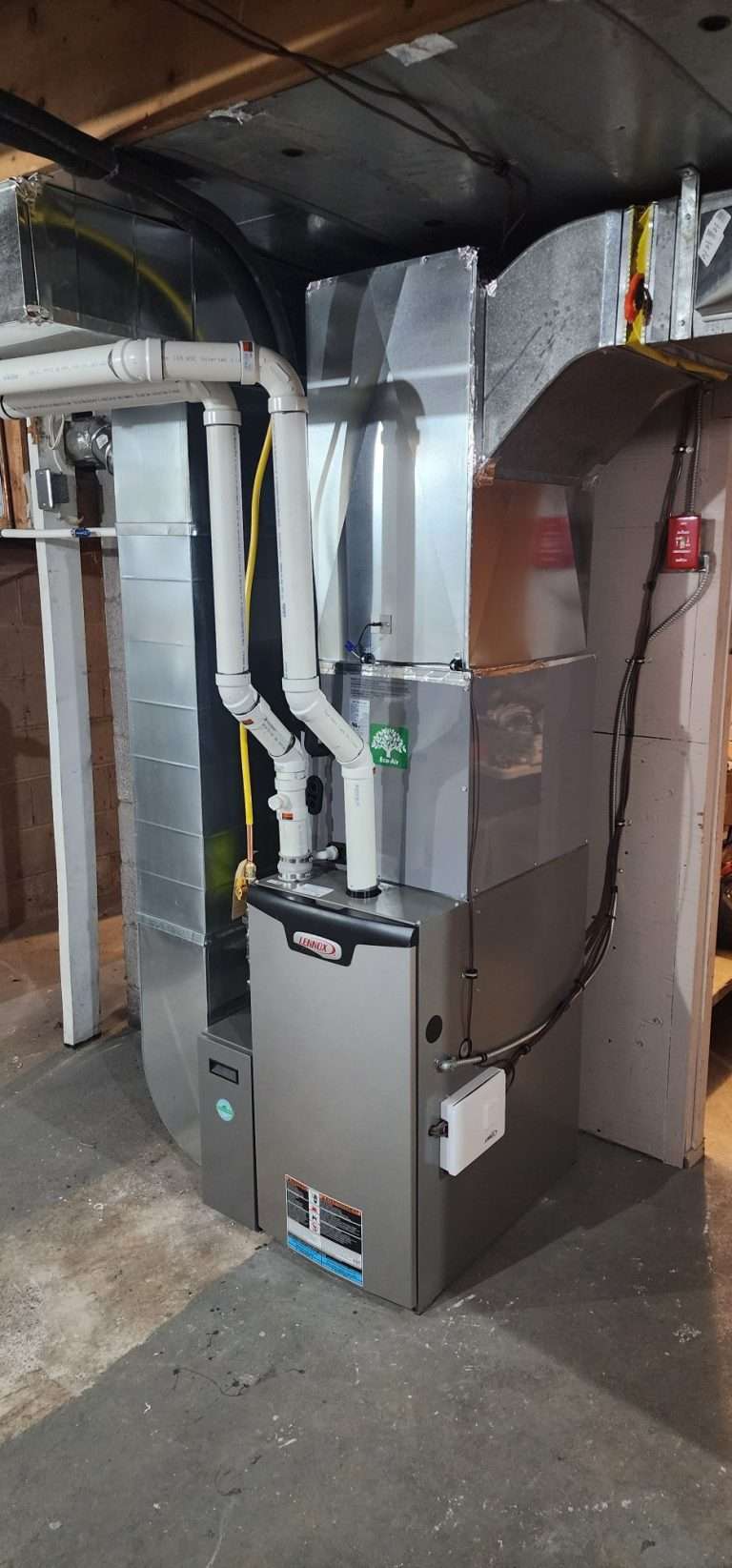
- Hybrid (dual-fuel): the heat pump runs down to a switchover point, often -12°C to -15°C, and a gas or propane furnace takes over below it. Best on propane, where the heat pump saves the most money, and the cheapest way to add a heat pump to a house that already has ducts and a furnace.
- All-electric: the air handler has electric heat strips that top up the heat pump on the coldest nights. Simple, no fuel, and it qualifies for the full rebate. The electrical panel has to have the room.
The installation details that decide whether it works
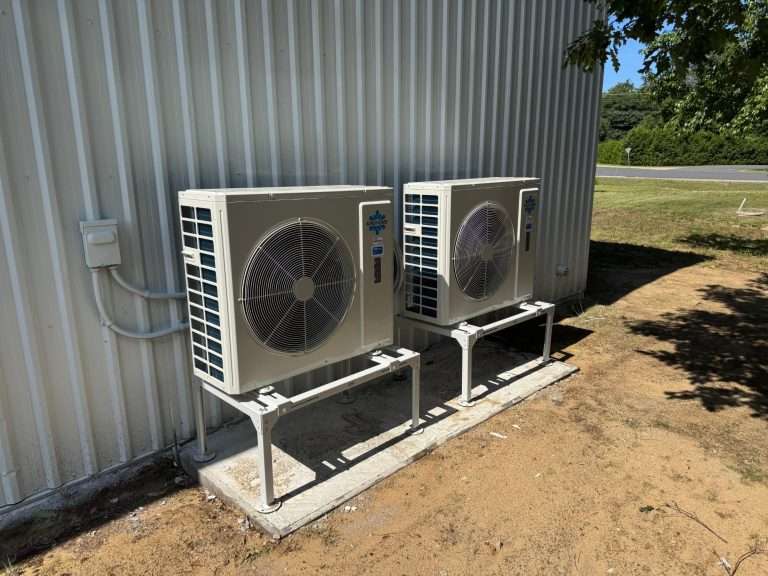
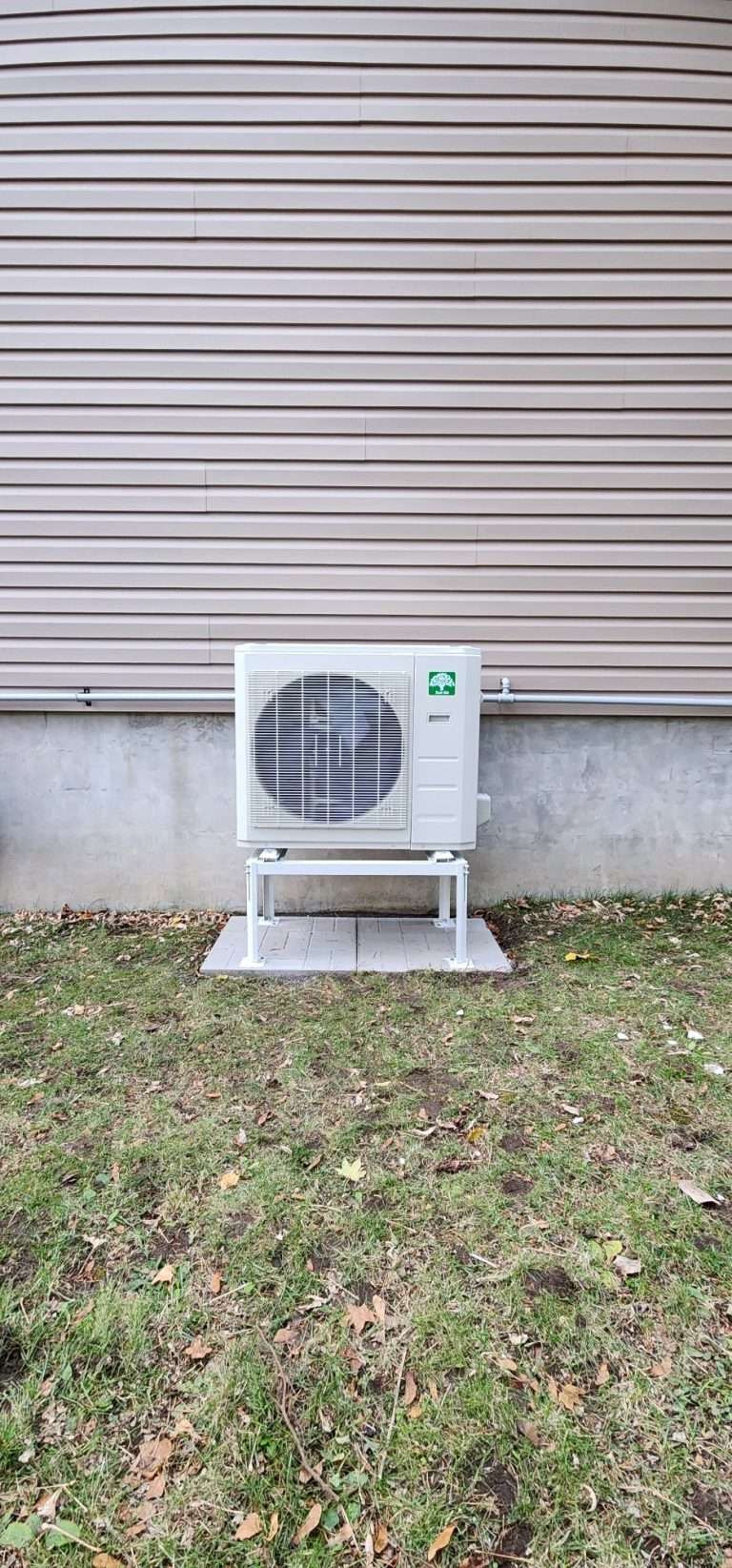
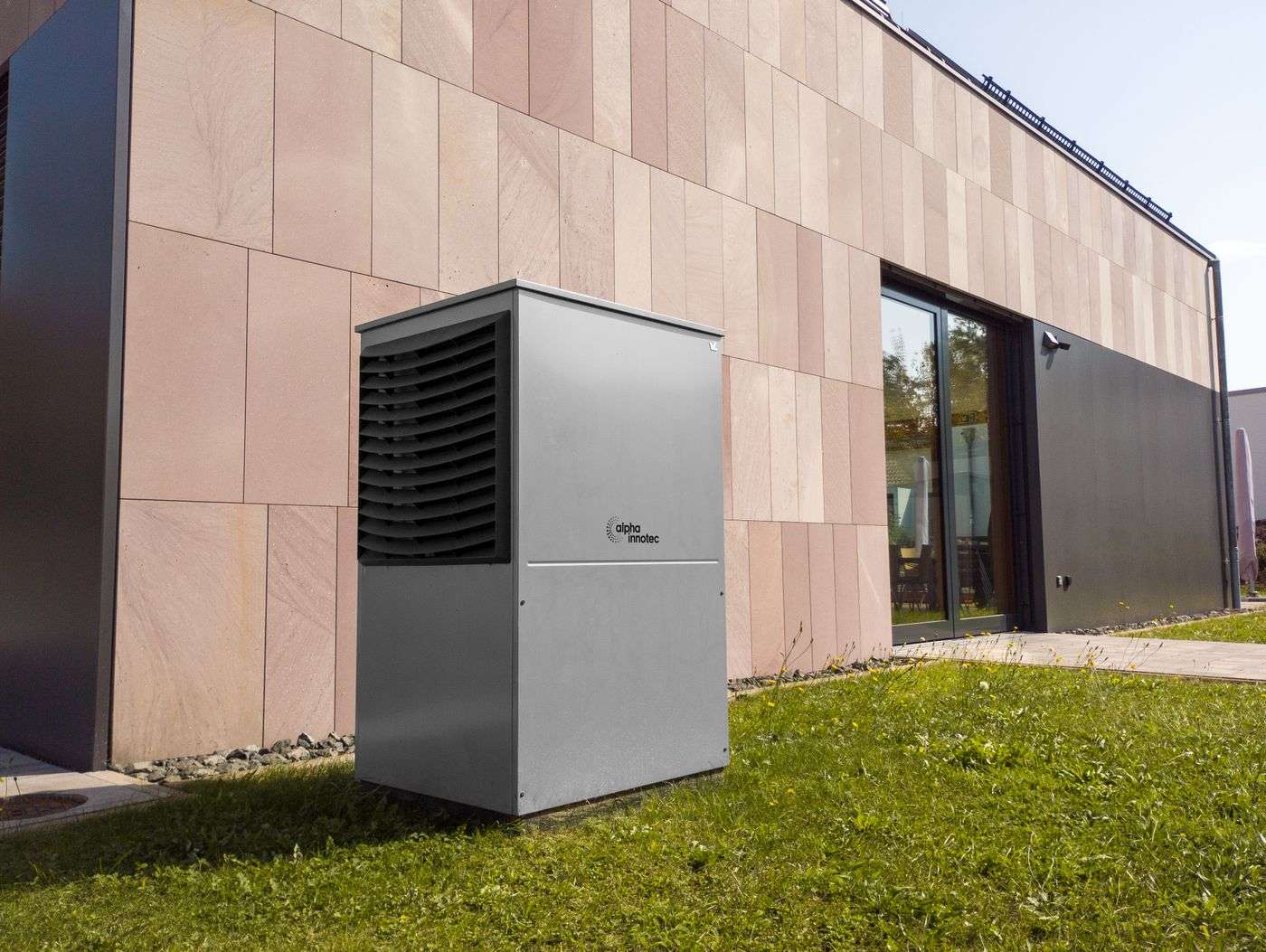
- Height. The outdoor unit sits on a stand 18 to 24 inches off the ground, clear of roof drip lines. Units set on a pad at grade get buried and ice up.
- Drainage. Defrost water has to drain and not refreeze under the unit.
- Airflow. Heat pumps need more airflow than furnaces. Undersized returns or crushed flex duct will starve it. We measure static pressure before we quote.
- Refrigerant line length and charge. Long runs to a mechanical room at the far end of a cottage have to be sized and charged correctly.
- Controls. The thermostat has to be set up for the switchover temperature and the backup heat so the strips or furnace do not run when the heat pump could.
What we see in the field
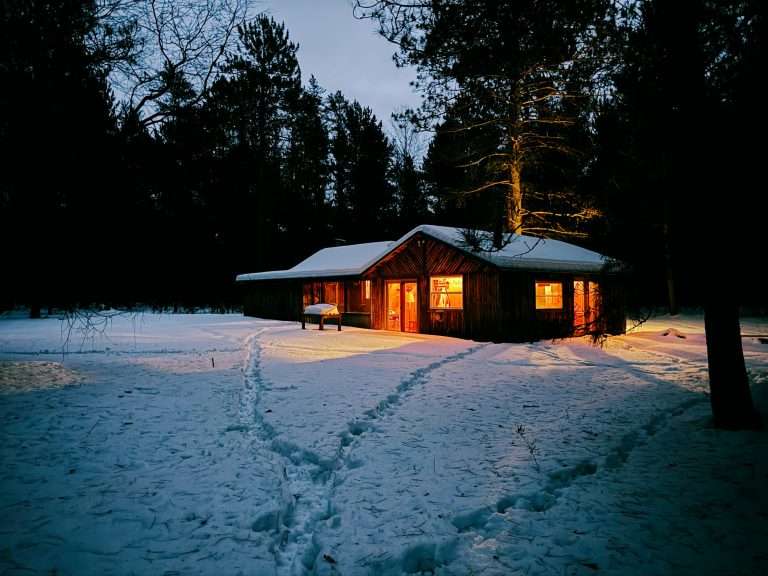
In Orillia, Barrie and Midland, hybrid systems on natural gas furnaces are the most common: the heat pump carries the shoulder seasons and most of the winter, the furnace does the deep cold. Around Gravenhurst, Bracebridge and the rural townships, cold-climate heat pumps paired with propane or replacing electric baseboard make the biggest difference to the bill. Cottages that sit at 10°C for the winter are a good fit for all-electric systems with remote monitoring. See the heat pump cost guide for prices.
Frequently asked questions
Cold-climate heat pumps are rated to -25°C or -30°C and keep producing heat below that at reduced capacity. Standard (non cold-climate) heat pumps lose most of their capacity below about -10°C, which is why they are not the right choice in Simcoe County or Muskoka.
It is in a defrost cycle, melting frost off the outdoor coil. Steam outside and a few minutes of cooler air inside is normal. If it happens every few minutes or ice builds up and stays, call for service.
Not necessarily. All-electric systems use electric backup strips for the coldest nights. Keeping a gas or propane furnace as backup (a hybrid system) is often cheaper to install and is the usual choice on natural gas.
Your electricity use goes up and your gas or propane use goes down. On propane, electric baseboard or oil, total heating cost usually drops a lot. On natural gas the savings are smaller; the main benefits are cooling, comfort and the rebate.
No. It needs airflow. Keep snow cleared around it and off the top, and make sure it is mounted on a stand above typical snow depth.
Ask us for a heat pump assessment. We size it to your design temperature, check the ducts and panel, and show you hybrid and all-electric options side by side.